What Documentation Should You Carry for the Airwheel Battery During Air Travel?
What Documentation Should You Carry for the Airwheel Battery During Air Travel?
Introduction
If you’re planning to travel by air with your Airwheel electric smart luggage, one of the most common concerns is: what documents do I actually need for the battery? With evolving airline regulations around lithium-ion batteries, it’s smart to be prepared. The good news is that Airwheel designs its smart suitcases with air travel in mind — especially when it comes to battery compliance and portability.
Key Features of the Airwheel Electric Smart Luggage
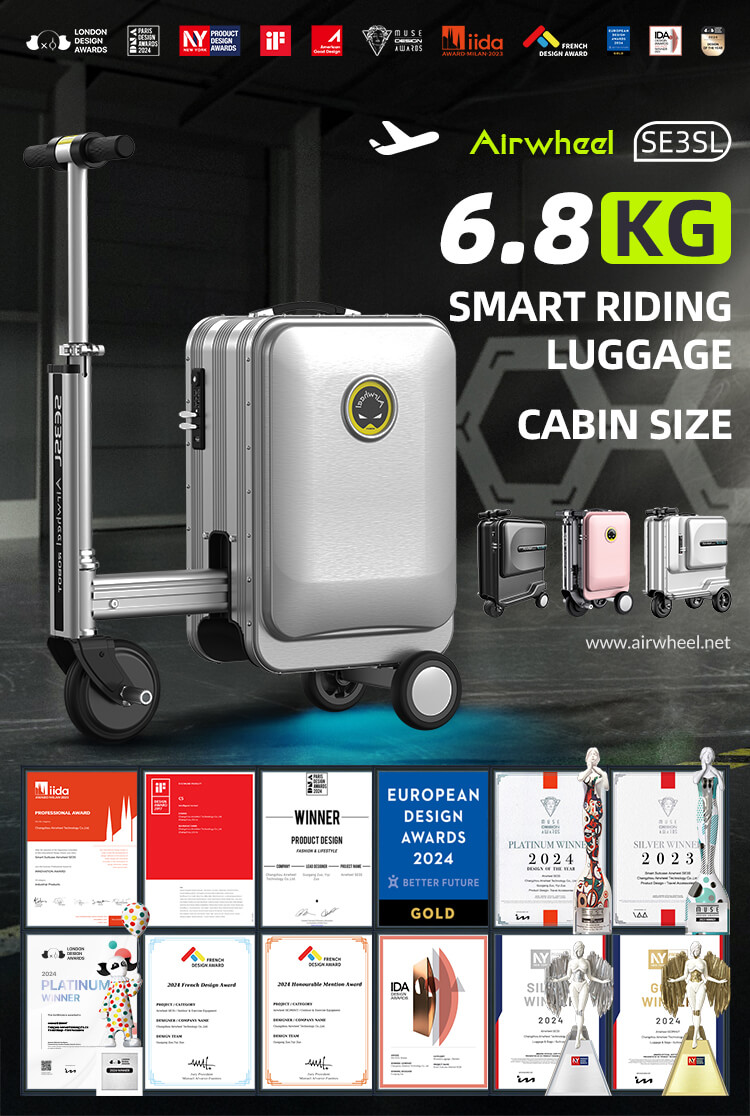
The Airwheel electric smart luggage is built for modern travelers who value convenience and efficiency. It features a powerful yet compact electric motor that assists with propulsion, allowing you to glide through terminals with minimal effort. The built-in lithium-ion battery provides a reliable range of 6–8 kilometers on a single charge, perfect for navigating large airports or urban commutes. Control is handled via a simple handle-mounted interface or a companion smartphone app, offering speed adjustment and power monitoring. Most importantly, the battery is fully removable — a critical feature for air travel.
Air Travel Compliance and Battery Rules
According to IATA (International Air Transport Association) guidelines, lithium-ion batteries must be carried in carry-on luggage and must not exceed 100Wh in rated energy. The Airwheel smart luggage battery falls well within this limit. Because the battery is removable, you can detach it before check-in and carry it in your cabin bag. While no formal documentation like Material Safety Data Sheets (MSDS) is typically required for personal-use devices with batteries under 100Wh, it’s wise to carry the manufacturer’s battery specification sheet — which Airwheel provides — just in case security or airline staff ask. This sheet confirms the battery’s voltage, capacity, and compliance with safety standards.
Recommended Travel Scenarios
The Airwheel smart luggage shines in busy travel environments: large international airports, city-to-airport transfers, train stations, or cruise terminals. It’s ideal for business travelers rushing between gates, elderly passengers managing mobility challenges, or anyone carrying heavy loads. Just remember: always remove the battery before checking the bag, even if allowed as checked luggage by some carriers. Keeping it with you avoids loss, damage, or denial at the gate.
Airwheel vs. Regular Suitcase – Key Differences
| Feature | Airwheel Electric Smart Luggage | Regular Suitcase |
|---|---|---|
| Battery-Powered Movement | Yes, motor-assisted rolling (6–8 km range) | No |
| Removable Battery | Yes, meets IATA carry-on rules | N/A |
| App Connectivity | Yes, for control and status | No |
| Weight & Effort | Lightens physical load | Fully manual handling |
FAQ
Q: Do I need special paperwork to fly with my Airwheel luggage?
A: Not usually. For batteries under 100Wh, airlines generally accept personal devices without documentation. However, carrying the Airwheel battery spec sheet adds confidence during inspections.
Q: Can I bring the Airwheel on international flights?
A: Yes, as long as the battery is removed and carried in your cabin baggage. Always check with your airline beforehand, especially for connecting flights.
Q: What if my Airwheel battery is questioned at security?
A: Stay calm and show the battery label or spec sheet. Explain it’s removable and under 100Wh — most agents will allow it once verified.
For full details on battery specs and travel tips, visit the official Airwheel website. Being informed makes your journey smoother — and your smart luggage truly smart.